
End-to-End Solution
AdobeXD
Jira
Azure
Care providers in Cardiology at Bayindir Saglik Grubu
Enhanced care delivery
Increased ROI
Cardiovascular Report for Clinicians
CVD Guideline Service
8 weeks
The Patient Diagnostic Profile, an HTML file designed to aggregate various patient data points into a single, comprehensible report. Our design led to an 80% reduction in time clinicians spend accessing patient data, significantly streamlining care delivery processes.
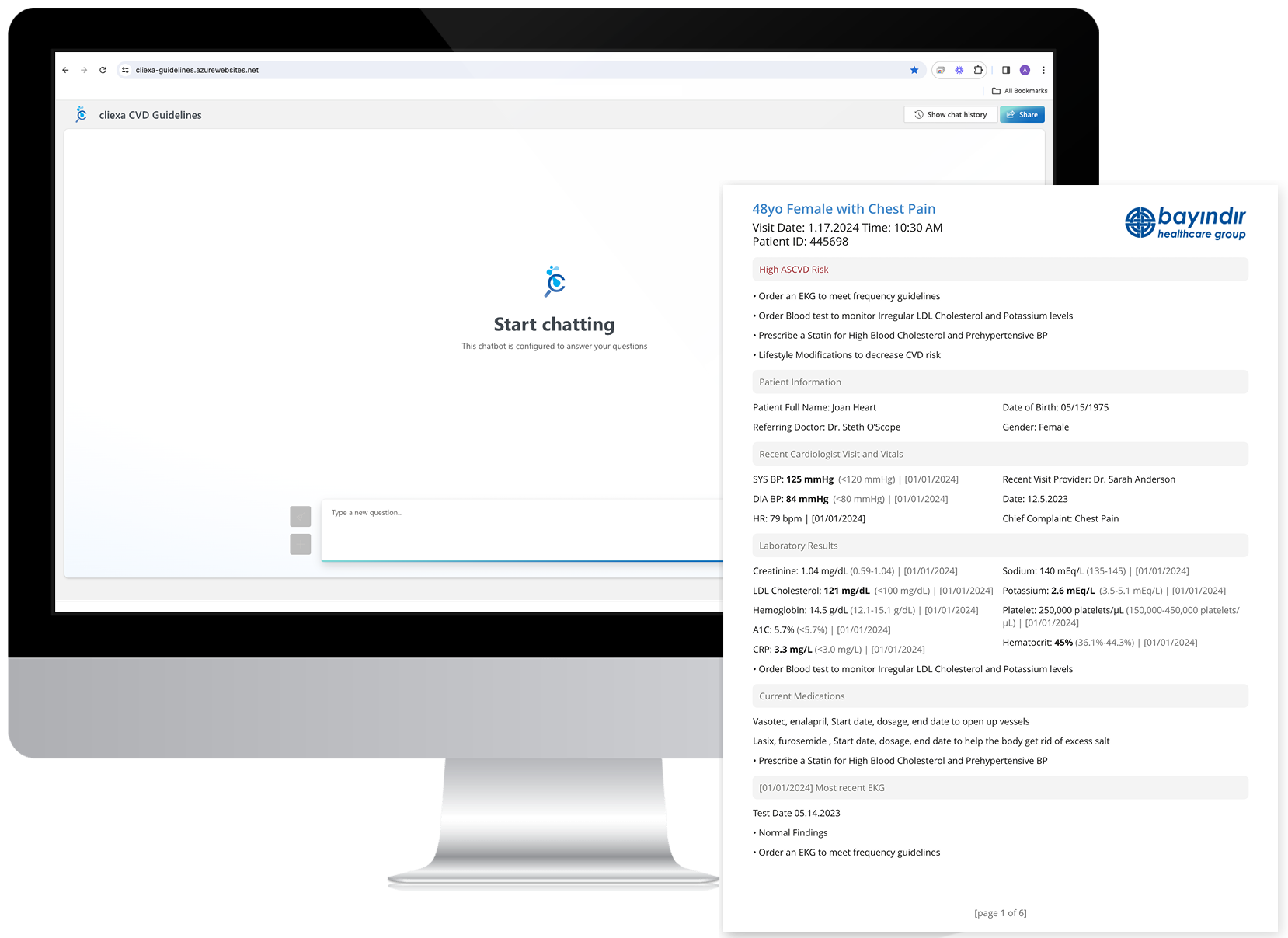
Bayindir is the largest group of hospitals in Turkey, with 10 locations around the country. It is known for its excellent care for both in-patients (those who stay in the hospital) and out-patients (those who visit for treatment and leave). Bayindir is an important part of health care in Turkey. Our stakeholder is in charge of the Cardiology department and is working hard to improve care for patients and quality of life for providers by finding new ways to improve care delivery.
The current challenge at Bayindir is the fragmented nature of patient data, which is scattered across multiple platforms and in various formats. Clinicians and cardiologists find themselves navigating through a labyrinth of information sources to piece together a comprehensive view of their patient's status. This is proven to be a time-consuming and error-prone process that detracts from patient care and the efficiency of healthcare delivery. Clinicians initially spent, on average, 12 minutes to gather necessary patient information, detracting from patient care efficiency.
In response to this pressing need, Bayindir is looking for a report generation service designed to aggregate and display critical patient data in a coherent and accessible manner at the point of care. This system should integrate a Cardiovascular Disease (CVD) guideline service, leveraging the latest ACC (American College of Cardiology) and ESC (European Society of Cardiology) guidelines. This feature empowers cardiologists with actionable recommendations, streamlining decision-making processes and enhancing patient outcomes.

As the Director of Product Design, I seamlessly integrated the design process with agile development practices, facilitating a relationship between design and development. My responsibilities included creating tickets, defining epic hypotheses that aligned with both our business objectives and Bayindir’s goals, establishing comprehensive product requirements, and setting clear success metrics. This role necessitated close collaboration with the development team to ensure the design’s feasibility throughout the implementation phase. Additionally, I worked alongside developers and QA testers, guiding the project to fruition by ensuring adherence to design specifications and achieving the established success metrics and quality standards. My leadership in this capacity was pivotal in bridging design intentions with technical execution, ensuring a cohesive and user-centric final product.
Through direct observation and detailed interviews with stakeholders, I identified significant inefficiencies in the current system for managing patient data at Bayindir. The process is notably cumbersome, requiring clinicians to navigate through an average of 20 clicks to gather necessary patient information, which is often dispersed and challenging to interpret. This discovery demonstrates the project’s necessity and scope, aiming to streamline data aggregation and enhance readability and accessibility for clinicians. The key data points identified for inclusion in the diagnostic report are crucial patient information and medical history details, ensuring a comprehensive and efficient review process for healthcare providers.
I then performed a literature review across various articles and publications to enrich the project’s background, offering insights into the importance of Clinical Practice Guidelines (CPGs) as a strategy for improving healthcare quality and safety. The review highlights the mixed effectiveness of CPGs in healthcare outcomes, underlining the potential of information technologies to improve their implementation. Barriers to entry, such as lack of awareness and complexity of guidelines, present clear opportunities to address in the scope of this project. The emphasis on evidence-based recommendations, transparency, collaboration, and regular updates in CPG development aligns with the project’s objectives to provide a dynamic, user-friendly, and evidence-informed service.
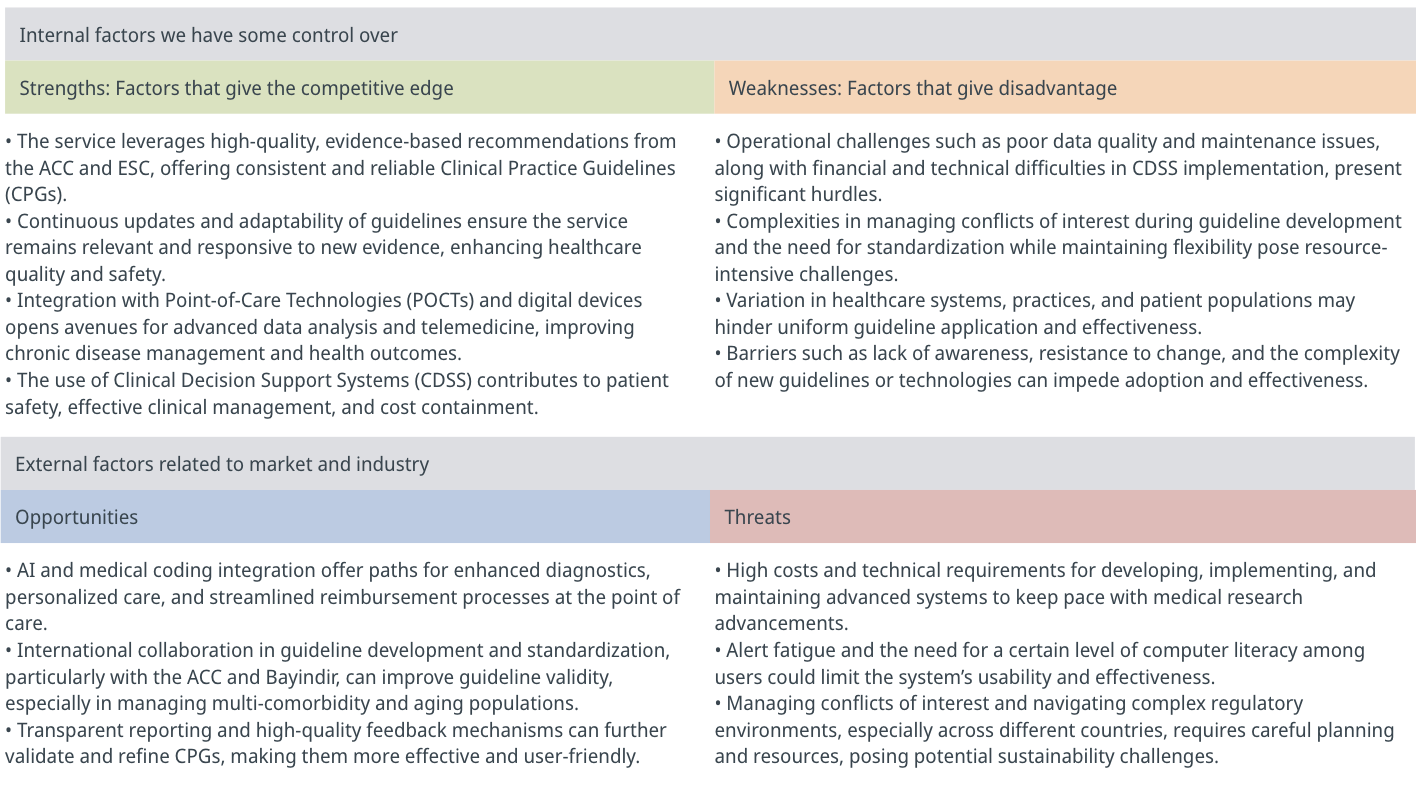
Pain Points:
• Fragmented Data Management
• Adherence and Awareness
• Standardization vs. Flexibility
• Technical and Financial Constraints
Opportunities:
• Leveraging Technology
• International Collaboration
• Feedback Loops and Transparency
• Education and Engagement
• Evidence-Based Adaptability
In recognizing the need for enhanced clarity and relevance in our communication, I initiated a comprehensive review of industry trends, competitor positioning, and stakeholder needs. This process identified a set of critical keywords, such as ‘Evidence-Based Recommendations’, ‘Guideline Flexibility’, and ‘Chronic Disease Management’, among others. Integrating these keywords into our messaging, we successfully updated our marketing materials, website, and product descriptions, aligning them closely with the values and concerns of our target audiences.The impact was significant. We observed a 30% increase in website engagement, a marked improvement in customer feedback regarding the clarity and relevance of our information, and a strengthened position in our market segment. This initiative not only improved our external communications but also bolstered internal knowledge and coherence around our product offerings and the value we bring to healthcare providers and patients.
Iperformed Epic Hypothesis, Lean Business Case and Product Requirements to define the goal, business outcomes, leading indicators, in-scope items for MVP, out-of-scope items and Nonfunctional requirements. And communicate the data points we need to integrate and include on the report dev.
Differentiator: The Patient Diagnostic Profile, presented as an HTML file, will aggregate crucial patient data points into a concise, easily digestible report. This contrasts with existing processes that require navigating through scattered information, offering a streamlined solution for immediate, impactful use in patient care.
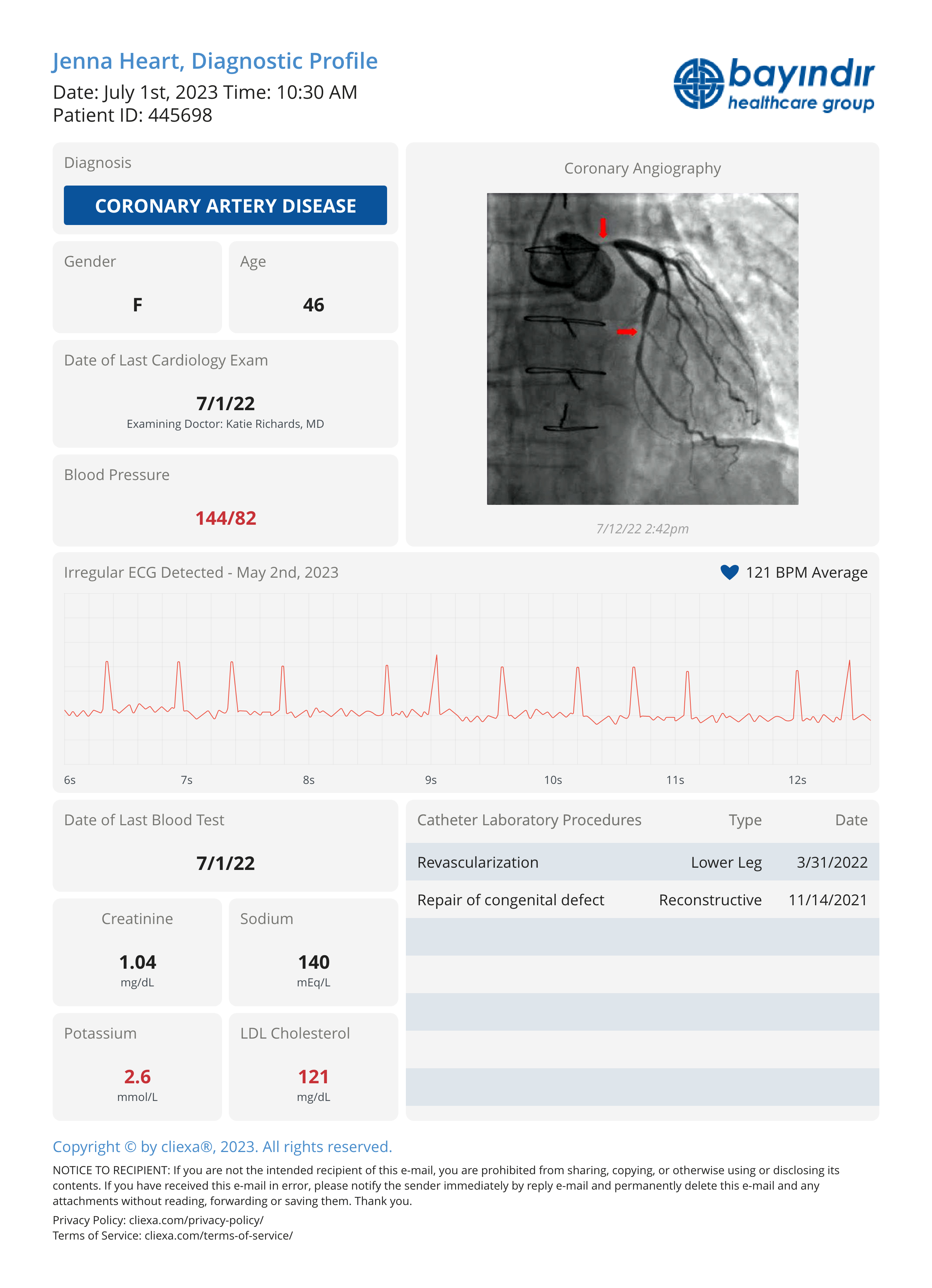
The initial report design served as our starting point. Key information is presented in a structured layout to quickly inform clinicians about patient status.
The solution streamlined data navigation, reducing clicks by 75% and cut down the total time spent collecting data by 80%.
Design Choices: The design prioritizes clarity, with bold headers for immediate identification of critical sections such as diagnosis, and visual aids like ECG graphs and angiography images to provide a rapid understanding of the patient’s condition.
Data Point Inclusion: Selection of data points was informed by clinical relevance and the potential to impact care decisions. Each element is chosen to provide a comprehensive snapshot of the patient’s health, considering the workflow of cardiologists.
Development of a Clinical AI for Cardiovascular Care Optimization
Objective: This project aims to create an advanced clinical AI tool designed to enhance the management and treatment outcomes for patients with cardiovascular diseases. Leveraging the comprehensive guidelines from the European Society of Cardiology (ESC) and the American College of Cardiology (ACC), the AI will focus on major chronic conditions including Heart Failure, Coronary Artery Disease, Hypertension, Atrial Fibrillation, and Diabetes.
Guideline Review and Harmonization: Conduct a thorough analysis to compare and synthesize the ESC and ACC guidelines for cardiovascular disease management, focusing on the specified chronic conditions. This will establish a unified framework for the AI’s decision-making process.
Data Integration and Analysis: Utilize available datasets from Electronic Medical Records (EMRs) and other relevant data sources to inform the AI’s algorithms. This includes identifying actionable data fields that correlate with optimal patient outcomes.
AI Development and Implementation: Design the AI tool to efficiently predict the next steps in patient care based on the integrated guidelines and data analysis. The system should facilitate quick access to actionable insights, enabling cardiologists to make informed decisions tailored to individual patient needs.
System Prompt Design
Concept Overview: Prompt engineering is the strategic crafting of input to guide AI systems toward desired outputs—crucial for the AI components in this project.
Principles and Best Practices: We adhered to principles such as clarity, contextual relevance, and task alignment, ensuring system prompts are intuitive and effective.
Application to Project: These principles were directly applied to the system’s UI/UX design, prompting clinicians through the report generation process with precision and ease.
Prompt Engineering Article Insights:Integration: The article’s insights helped us understand the importance of structured input for AI performance. This informed our design of the EMR integration, where prompts were tailored to extract and synthesize patient data efficiently.
Practical Application: We translated theoretical prompt engineering principles into the EMR’s interface, enabling clinicians to interact with the AI seamlessly, as exemplified in the system message guidelines for the AI CVD Assistant.
Solution Demonstration
Sample Prompt and Response: A practical demonstration can be provided through a sample prompt and response scenario. The AI’s interpretation of clinical data and subsequent recommendations demonstrate the system’s support in clinical decision-making. Please request a demonstration.
Design Insights: Our design strategy focused on creating a dialogue between the clinician and the AI, where system prompts facilitate a concise yet comprehensive assessment of patient data, leveraging both human expertise and AI efficiency.
Refinement and Validation: Iterative Refinement: Each design iteration was rigorously tested in clinical simulations, with iterative feedback loops fine-tuning the system’s performance.
Technical Constraints: Nonfunctional requirements such as secure data connections and system availability were integrated early into the design, ensuring reliability and compliance.
Validation Steps: We conducted validation workshops with both the technical team and cardiologists, ensuring that the design met both usability standards and clinical needs.
Conclusion
Design Impact: The iterative design process was instrumental in developing a system that not only supports the clinicians’ workflow but also elevates the standard of patient care through enhanced clinical decision support.
Future Iterations: As we look to the future, we anticipate further refinements, including the integration of more advanced AI diagnostic tools and expansion of the system’s capabilities to include real-time data analysis.

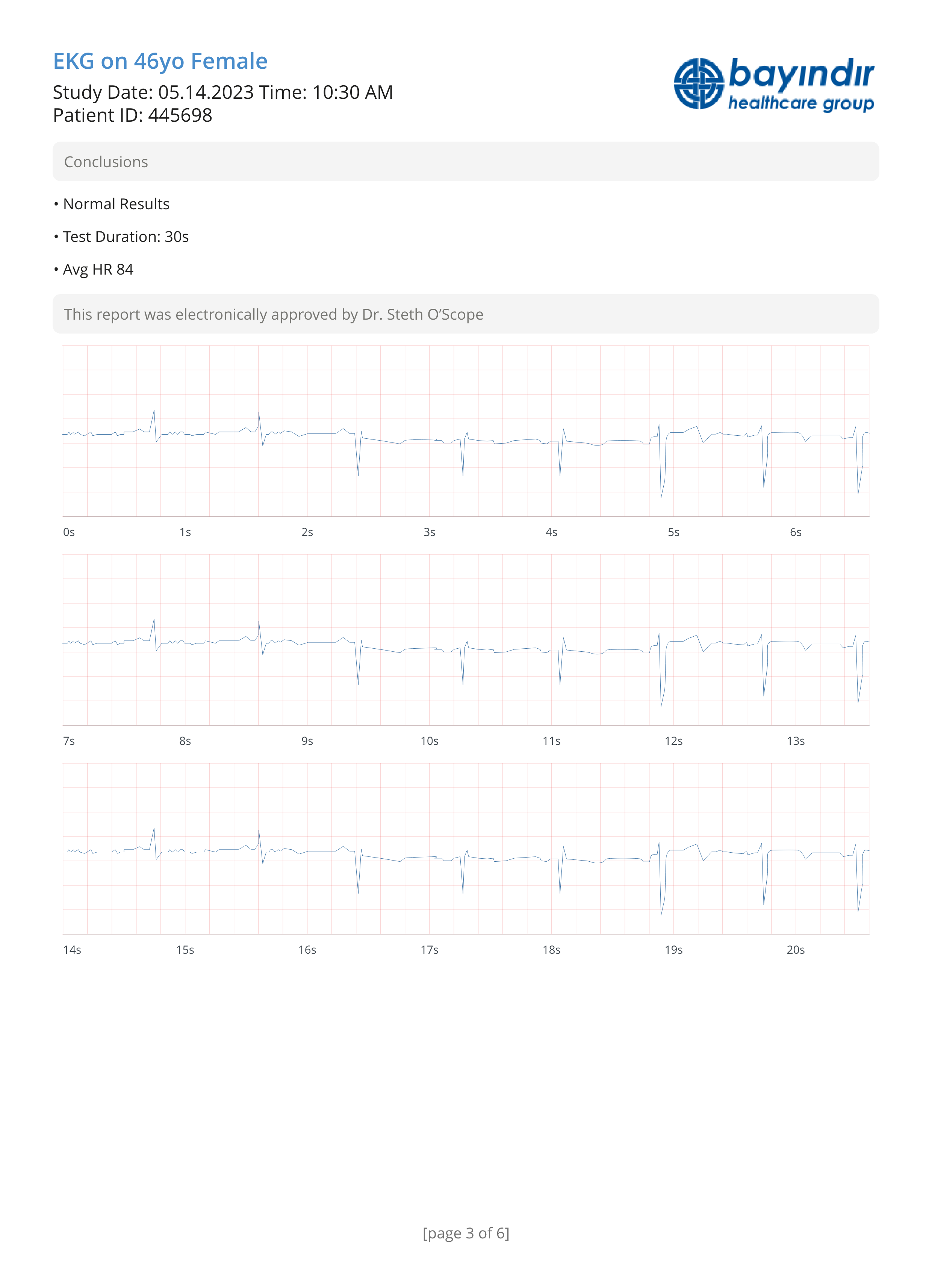
Cardiovascular report for inpatient and outpatient groups with aggregated data and guidelines
The utilization of this report reduced the average time clinicians spend retrieving patient data from 12 to 2 minutes, an 84% improvement, enhancing the speed of care delivery.
The journey of designing the Patient Diagnostic Profile for Bayindir highlighted several key considerations that drove the project’s direction:
Complex Data Management: The current state of data management within Bayindir is inefficient and fragmented, posing a challenge to timely and informed patient care.
Critical Data Points Identified: Essential patient data and historical medical information have been identified, focusing on enhancing the clinical decision-making process.
Significance of CPGs: The literature underscores the importance of integrating and effectively implementing CPGs to improve healthcare delivery and outcomes.
Opportunities for Improvement: There’s a significant opportunity to leverage technology to overcome existing barriers and enhance the adherence and implementation of CPGs, particularly by addressing the challenges of complexity and clinician awareness.
Technical Feasibility: Balancing ambitious design ideas with what was technically possible within the existing IT infrastructure and available data was a constant consideration.
User Adoption: Ensuring the new system would be embraced by clinicians meant addressing potential resistance to change by demonstrating clear, immediate benefits to their daily workflow.
Scalability: Designing a system that not only meets the current needs but is also scalable to accommodate future requirements and integrations was a concern that required foresight.
User-Centric Design: The importance of putting user needs at the forefront cannot be overstated. Clinician feedback was invaluable in refining the system to ensure it delivered practical value.
Iterative Approach: Adopting an iterative approach allowed for flexibility in design and the ability to refine the product based on real-world use and feedback.
Collaborative Development: Working closely with cross-functional teams including clinicians, developers, and AI specialists facilitated a more holistic and informed design process.
Impact Measurement: Designing a study to measure the impact of implementing the report into a CVD specialty, leveraging reports built in the ACC and CVD modules. This will provide quantitative data to validate the design's effectiveness.
Expansion: Utilizing insights from speculative design, the solution will be adapted for primary care and diabetes management, broadening its scope and utility.
Continuous Learning: Insights from other projects, such as the MDHAQ and AI for OUD, will be used to further refine interaction design and report content, ensuring that the system evolves with emerging needs and technologies.
The 90% adoption rate and 150% ROI within the first year highlight the project's success and the potential for further expansion into primary care and diabetes management.
In creating the Patient Diagnostic Profile for Bayindir, we employed speculative design to reimagine the future of healthcare data management. This approach allowed us to explore beyond current constraints and envision new possibilities for enhancing patient care. Insights from projects like MDHAQ and AI for OUD were instrumental, guiding us in challenging conventional design thinking and proposing innovative interaction designs. Our process was characterized by envisioning future scenarios where our diagnostic tool could transform patient engagement and care outcomes. By iterating on these visions, we refined our tool to not only meet today's needs but also to anticipate tomorrow's challenges.
I extend my gratitude to the invaluable contributions from our diverse team of healthcare professionals, data scientists, and engineers. Their collaborative spirit and expertise were crucial in pushing the boundaries of what's possible in healthcare technology. As we move forward, our commitment to speculative design and continuous innovation remains strong. We are now focusing on evaluating the impact of our tool in specialized care settings, aiming to broaden its use in primary care and diabetes management. Through speculative design, we continue to explore and shape the future of patient care, aiming to adapt and respond to the ever-evolving landscape of healthcare needs and opportunities.